
WA Wildflowers and Wave Rock: A Three-Day Loop
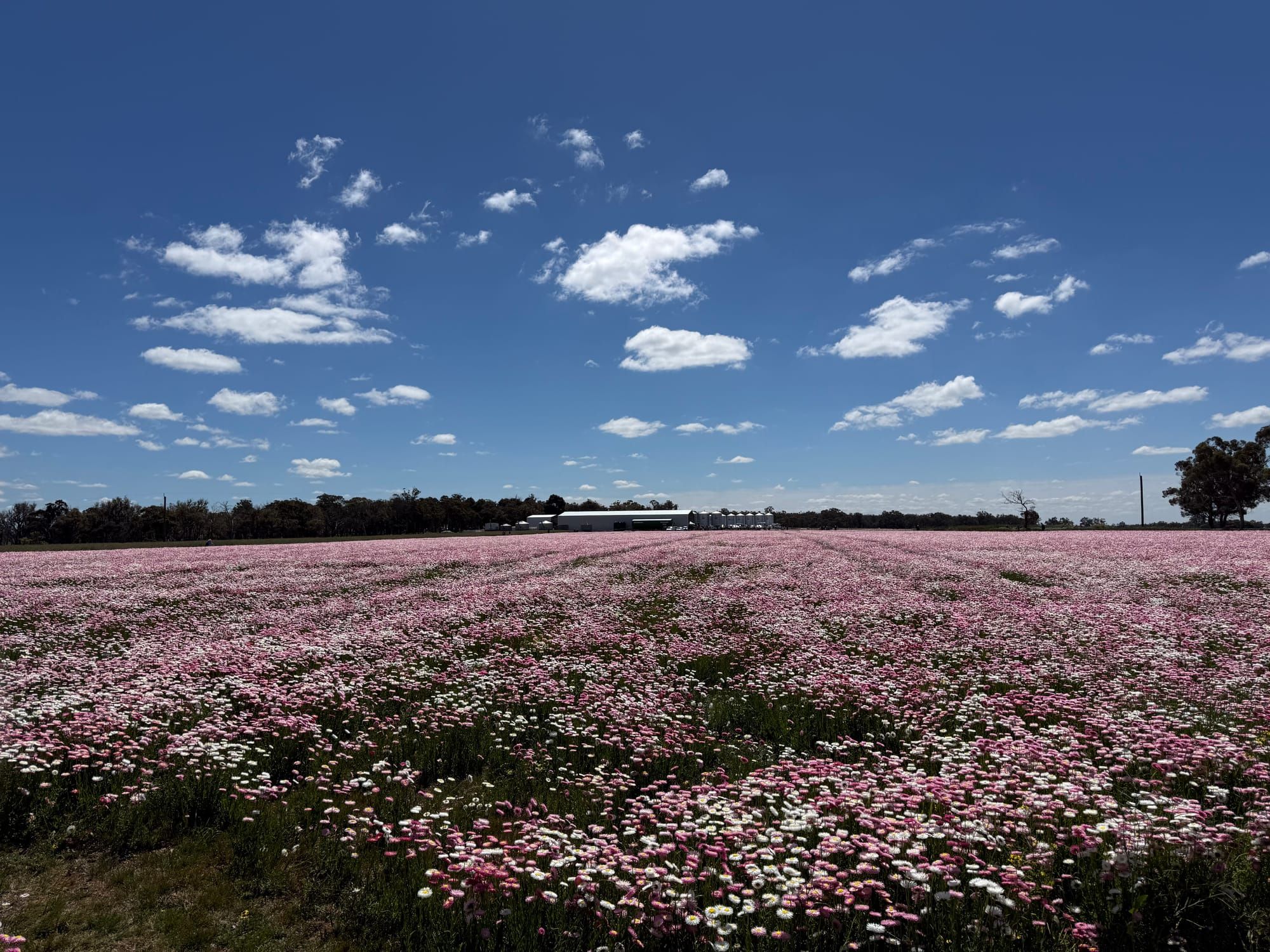
At half past eleven on a Sunday morning we were standing at the edge of a paddock in Mobrup, about 300 kilometres south-east of Perth, and the ground was pink all the way to the tree line. Around a dozen hectares of everlastings were in full flower. The farm opens its gate to visitors for one day each spring, and we had built a long weekend around it.
We also had unfinished business further east. Wave Rock had sat on our someday list for years, always a little too far for the time we had. So we joined the two into one loop, with WA wildflowers on the Sunday, Wave Rock on the Monday, and home by dark. It came to close to 1,200 kilometres in three days. That is a lot of driving, and we would do it again.
Wildflower season in Western Australia is short, and it moves south as spring warms. By early October the Great Southern is in full colour and the window is already closing. This is how we spent ours, with the distances and costs written down for anyone planning their own.
The route at a glance
| Day | Route | Distance | Driving time |
|---|---|---|---|
| Saturday | Perth, Williams, Wagin and Broomehill, with an evening in Katanning | About 345 km | About 4 hours 15 minutes |
| Sunday | Broomehill, Katanning, Lake Ewlyamartup, Kojonup, Mobrup and back to Broomehill | About 240 km | About 3 hours 45 minutes |
| Monday | Broomehill, Wave Rock and Perth | About 700 km | About 8 hours 15 minutes |
We stayed both nights in Broomehill, in a granny flat that a friend arranged for us. Driving times exclude stops and roadworks. Travellers flying into Western Australia can collect a hire car at Perth Airport and follow the same loop.
Day one: Perth to Broomehill by Williams and Wagin
We left Perth on Saturday morning and followed Albany Highway south-east. The Williams Woolshed, about two hours out, is where most people on this road stop for coffee, and we did the same. Past Williams the country opens into broad paddocks of ripening grain, with old eucalypts along the creek lines, and the driving becomes easy.
At Arthur River we turned east for Wagin. The town is known for the Giant Ram, a fibreglass merino nine metres tall and thirteen metres long that has stood at the edge of town since 1985. It is worth ten minutes and a photograph. The main street deserves longer. Wagin has kept its old brick shopfronts and its town hall, and the lavender in the park beside the ram was in full flower.
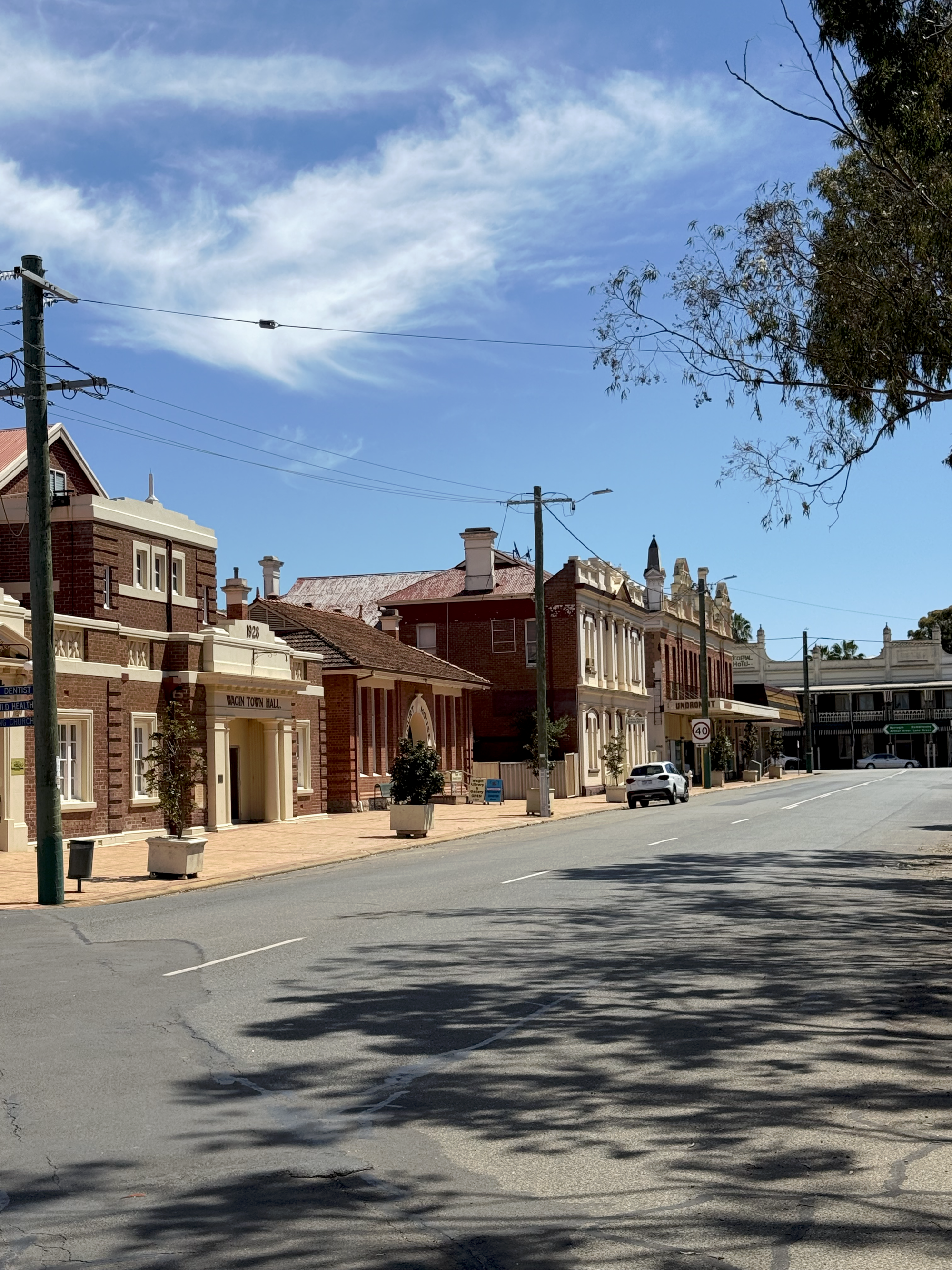
Broomehill is an hour further south. It is a small village with a heritage walk, a museum in the 1898 town hall, and the 1911 Henry Jones Building, which once sold everything from flour to bullets and now holds a winery, a café and a bed and breakfast. Broomehill is also where the Holland Track begins, the route cut in 1893 towards the goldfields.
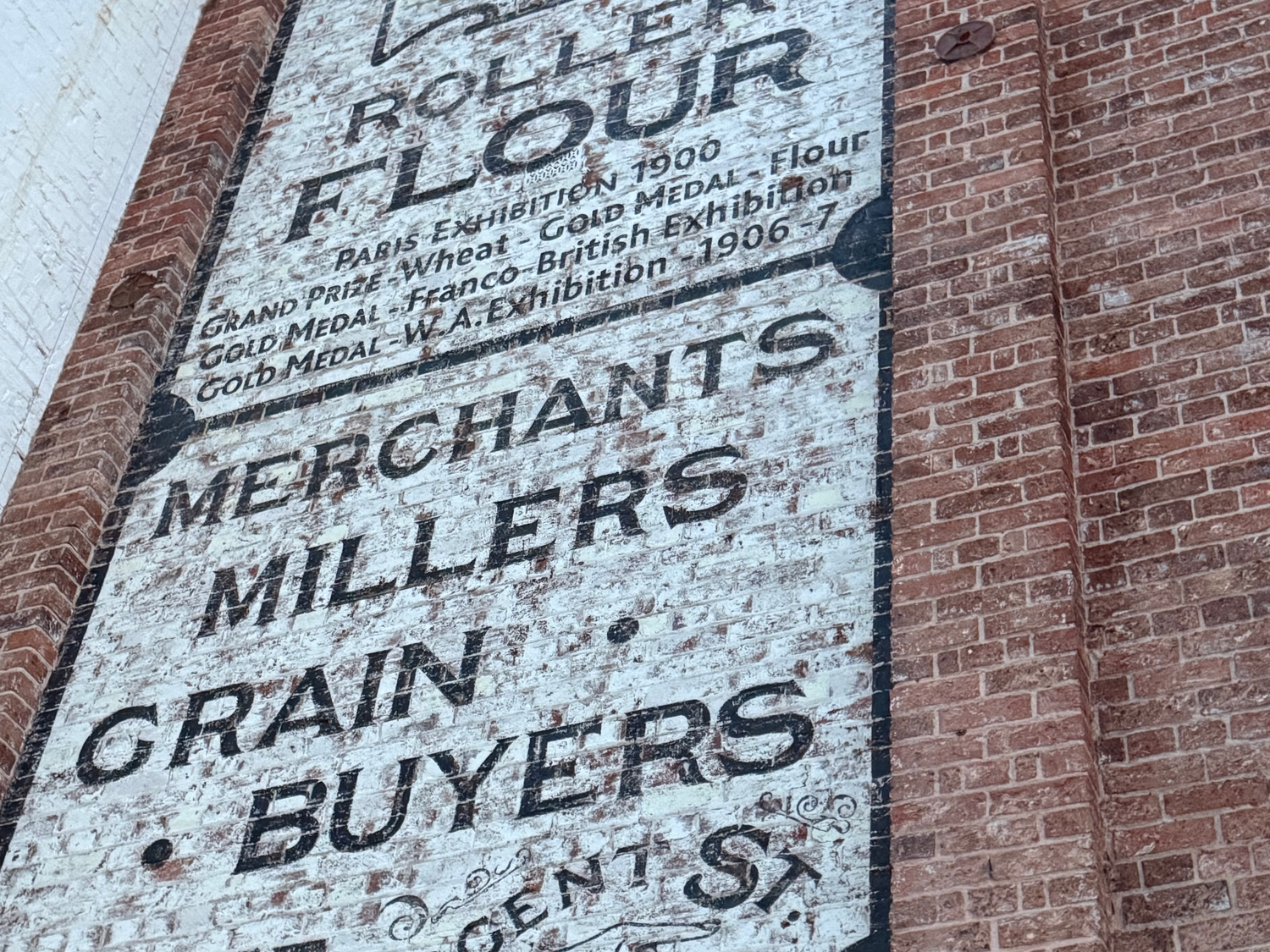
That evening we drove twenty minutes north to Katanning for dinner at the Premier Mill Hotel. Frederick Piesse built the flour mill in 1891. It now holds 22 hotel rooms, the Cordial Bar in the basement and a Dome at street level that is unlike any other we know in the state. We ordered from the After Five menu, had a drink, and stayed talking with the staff and a few locals. The painted sign on the brickwork still advertises Premier Roller Flour and its prizes from the Paris Exhibition of 1900.
Day two: a lake at breakfast and WA wildflowers at Mobrup
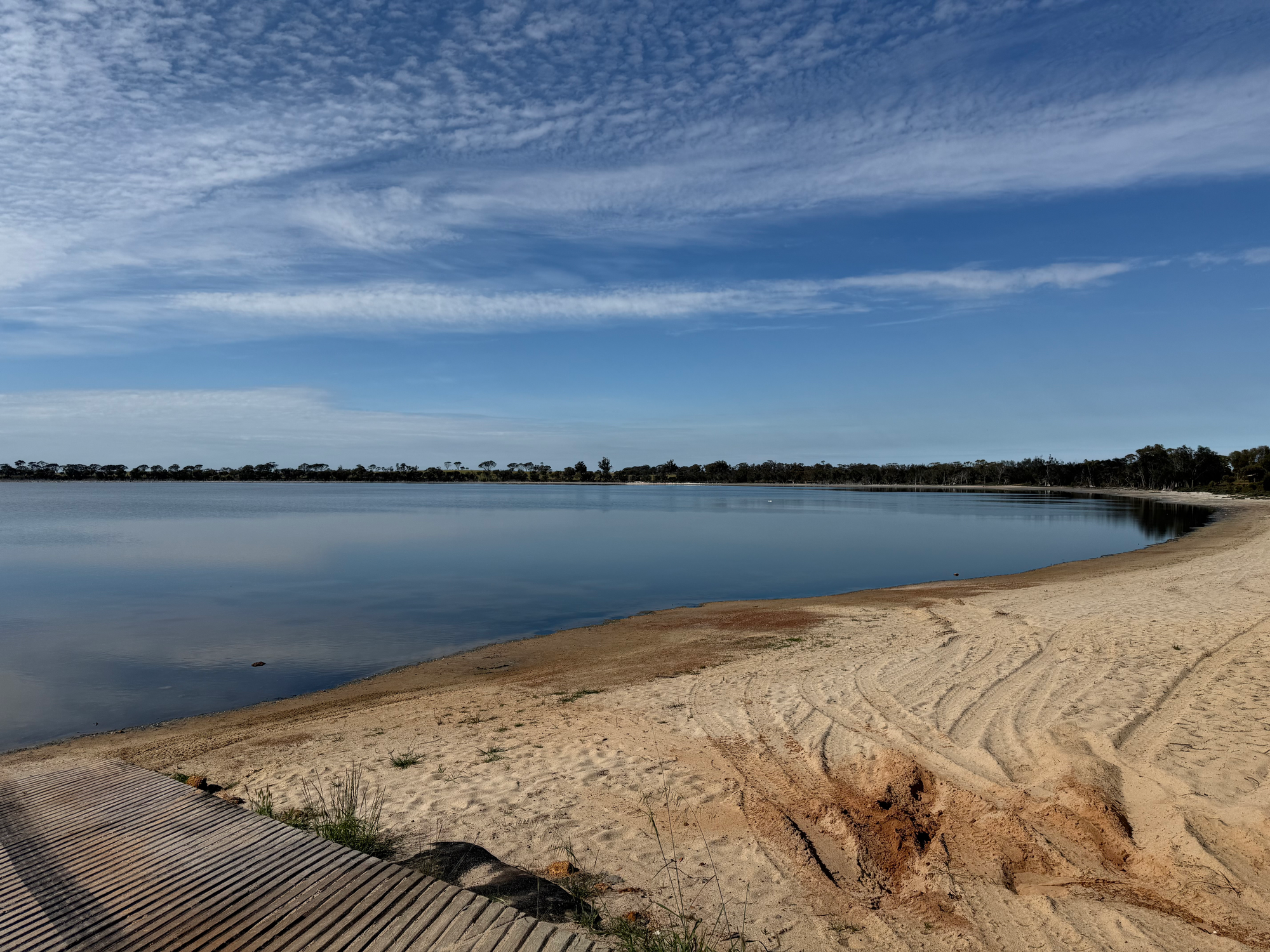
Sunday began at Lake Ewlyamartup, 17 kilometres east of Katanning. The lake holds water for most of the year, and the shire counts 95 bird species there. At nine in the morning the water was flat and the sky was doing most of the work. There is a bird hide, picnic shelters and a boat ramp. There are no bins, so take your rubbish with you.
From the lake we crossed west to Kojonup on Albany Highway and stopped only for fuel. Travellers with more time can visit The Kodja Place, which tells the story of the district through Noongar and settler voices side by side. Its Australian Rose Maze holds around 1,400 Australian-bred roses that begin flowering in October.
Mobrup is about 40 kilometres south-west of Kojonup, and it is where we spent the rest of the day. A working sheep and grain farm there opens its everlastings paddock to visitors for one day during the Bloom Festival. You park in the farm yard beside the silos and the harvester, then walk out to the flowers.
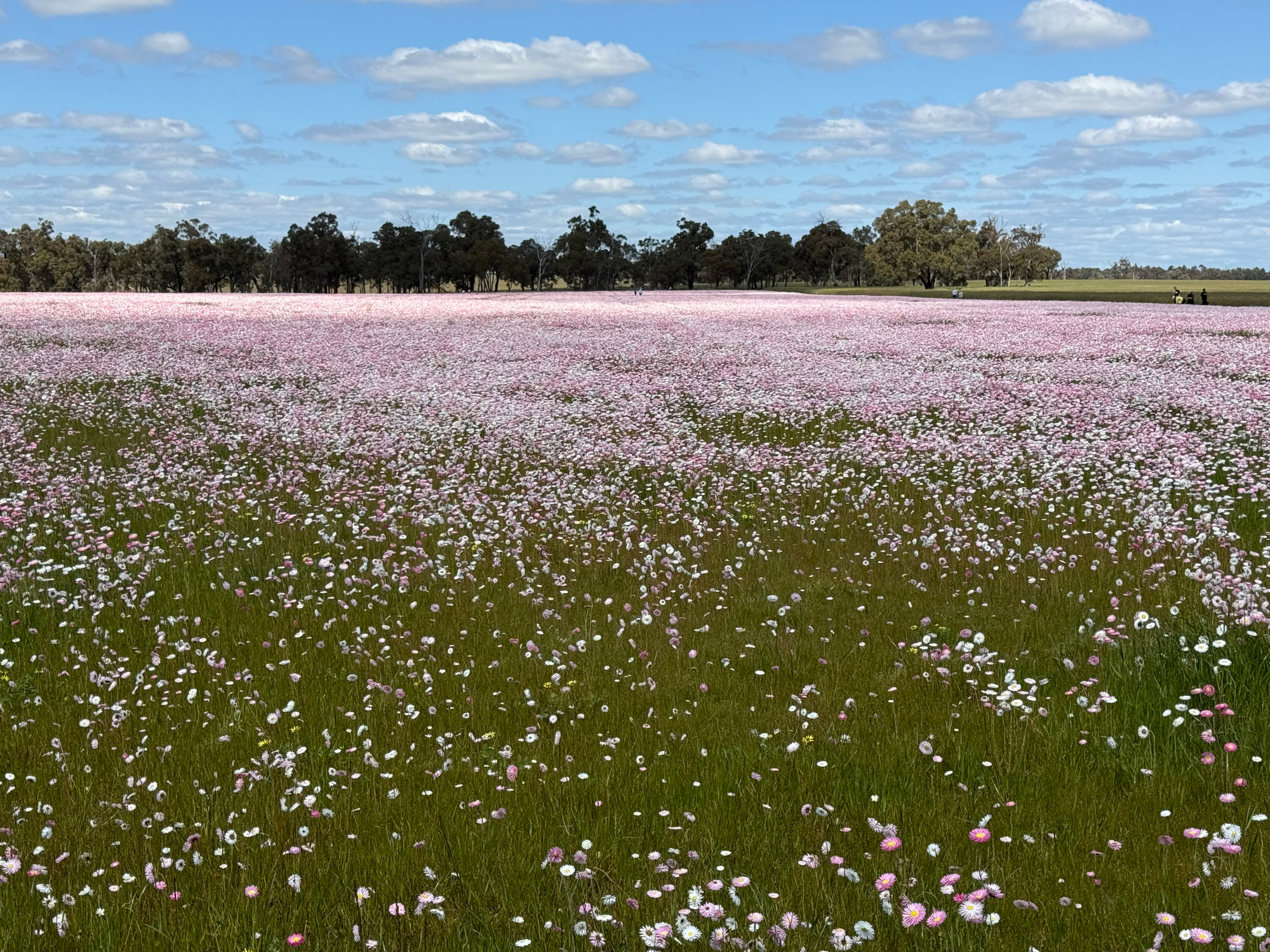
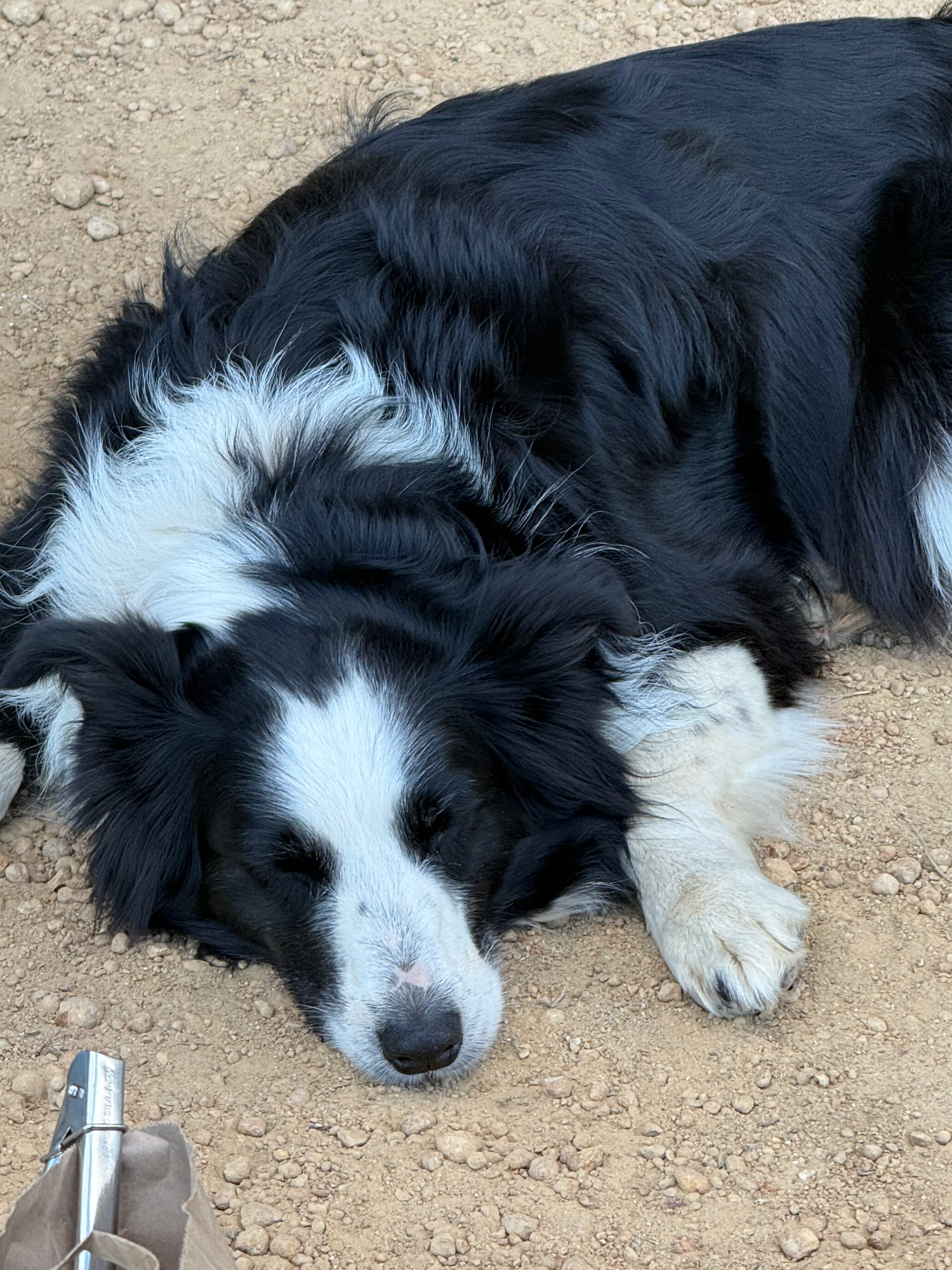
The paddock is larger than photographs suggest. Pink and white paper daisies run in drifts across the whole field, low enough to see over and dense enough to hide the soil. People spread out and went quiet. We stayed far longer than we had planned. Late in the afternoon Willow, the farm's border collie, was asleep in the gravel, tuckered out after a day of pats from strangers.
Entry was free in 2026. A bunch of flowers cost a $5 donation to charity, and the Kojonup Women's Club ran a sausage sizzle with morning and afternoon tea. The open day ran from 10am to 5pm on Sunday 4 October as part of the Bloom Festival, the Great Southern's spring wildflower program across eight shires.
Day three: Wave Rock and the long way home
Monday was the long day. Broomehill to Wave Rock is about 255 kilometres north-east across the grain belt. We went by Dumbleyung, Dudinin, Kulin, Kondinin and Karlgarin, a little over three hours on long straight roads between small towns. We arrived in the early afternoon.
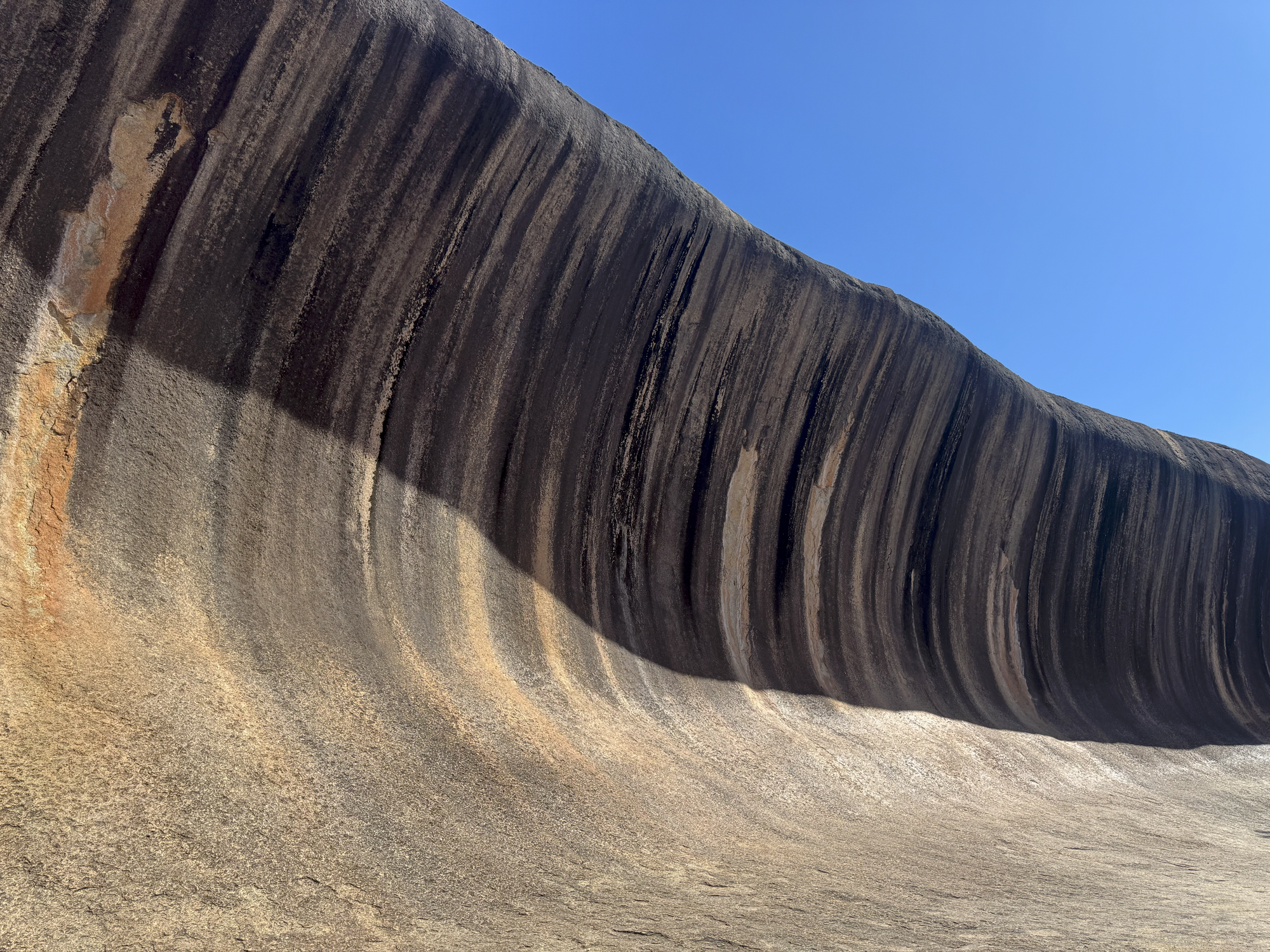
Wave Rock is one face of Hyden Rock, a granite outcrop about 2.7 billion years old. The wave stands 15 metres high and runs for about 100 metres, streaked in rust, grey and black where rainwater has run down the stone. It is 100 metres from the car park, and entry is $15 per vehicle. Our stay was short. Thomas had been several times, and for his wife Kristen it was a first visit after years of meaning to go. It was a tick on the bucket list, and it was magnificent to stand under.
Allow time for the walk over the top of the rock and for the one-kilometre loop to Hippo's Yawn. Wildflowers bloom around the rock from August to October.
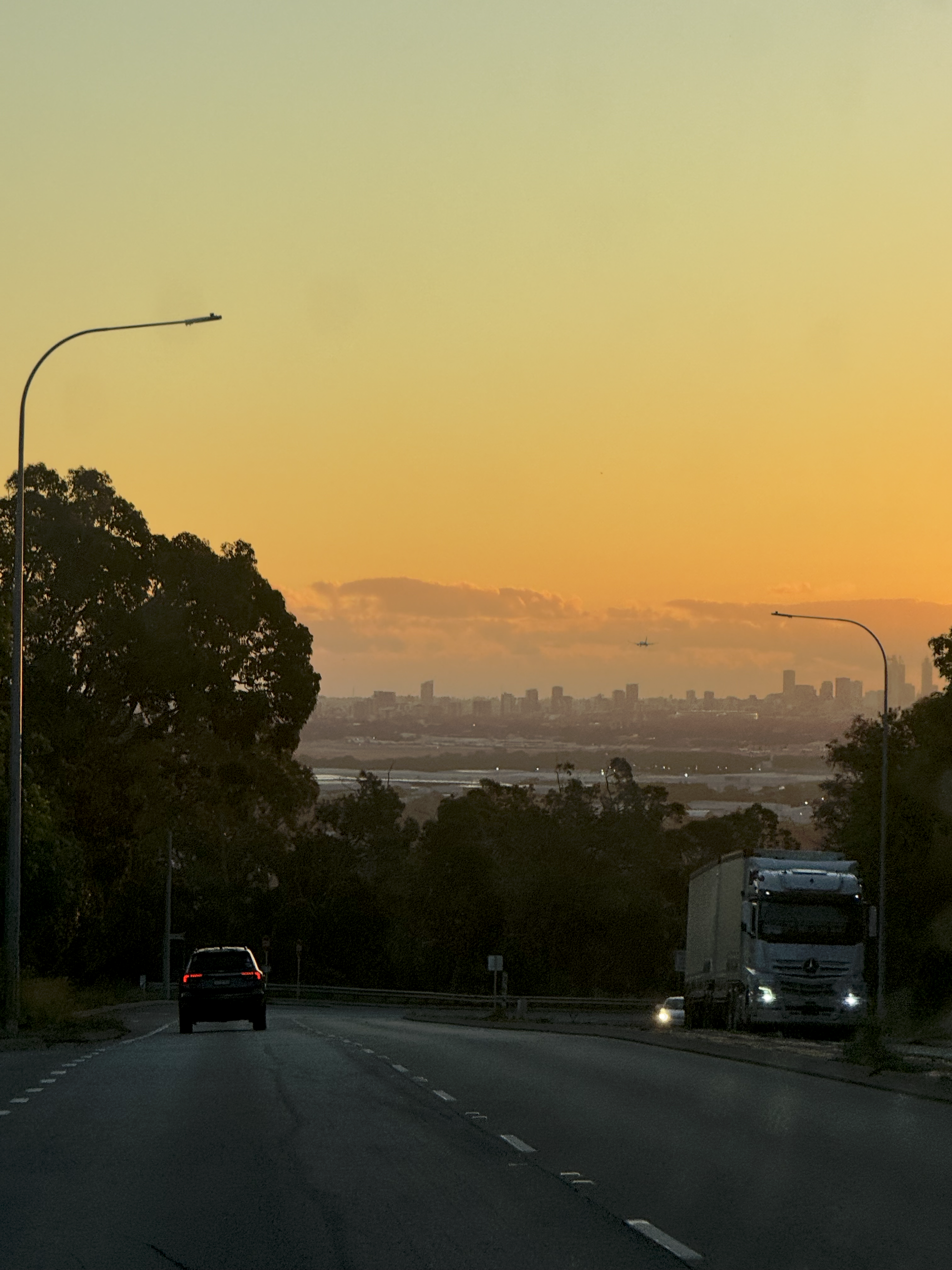
Then we drove home. Hyden to Perth is about 340 kilometres by Brookton Highway, a little over four hours. We came down off the Darling Scarp at sunset, with the city skyline ahead and a plane on approach to the airport.
What to know before you go
- The Mobrup open day runs on one day each spring, and the date is published in the Bloom Festival program.
- Accommodation in Katanning and Kojonup is very limited, so book a room well before the program is released.
- Mobrup alone is a long day trip from Perth, at about three and a half hours each way, so a night nearby makes the day far more comfortable.
- Monday is the demanding day. Two drivers make it comfortable, and an extra night in Hyden makes it gentle.
- Driving times here exclude roadworks, so add a margin to each leg.
- The gaps between towns on the Hyden leg are long, so fill the tank before you leave Katanning.
- Kangaroos are most active at dawn and dusk on country roads, so plan to be off the open road before sunset.
- Mobile coverage thins out between towns, so download offline maps before you leave.
- The farm is a working property that a family opens for one day, so follow the directions you are given on arrival.
Prices and dates are current as of 6 October 2026. This is general information, and road and weather conditions change, so check them for your own trip.
Your next step
Book your accommodation first. Rooms in Katanning and Kojonup are very limited in wildflower season, and we are already looking at ours for next spring. Choose three days between mid-September and mid-October, secure a bed, and let the Bloom Festival program tell you which Sunday the paddock at Mobrup opens. Someday becomes a date once it is written down.